Lessons in Kabbalah
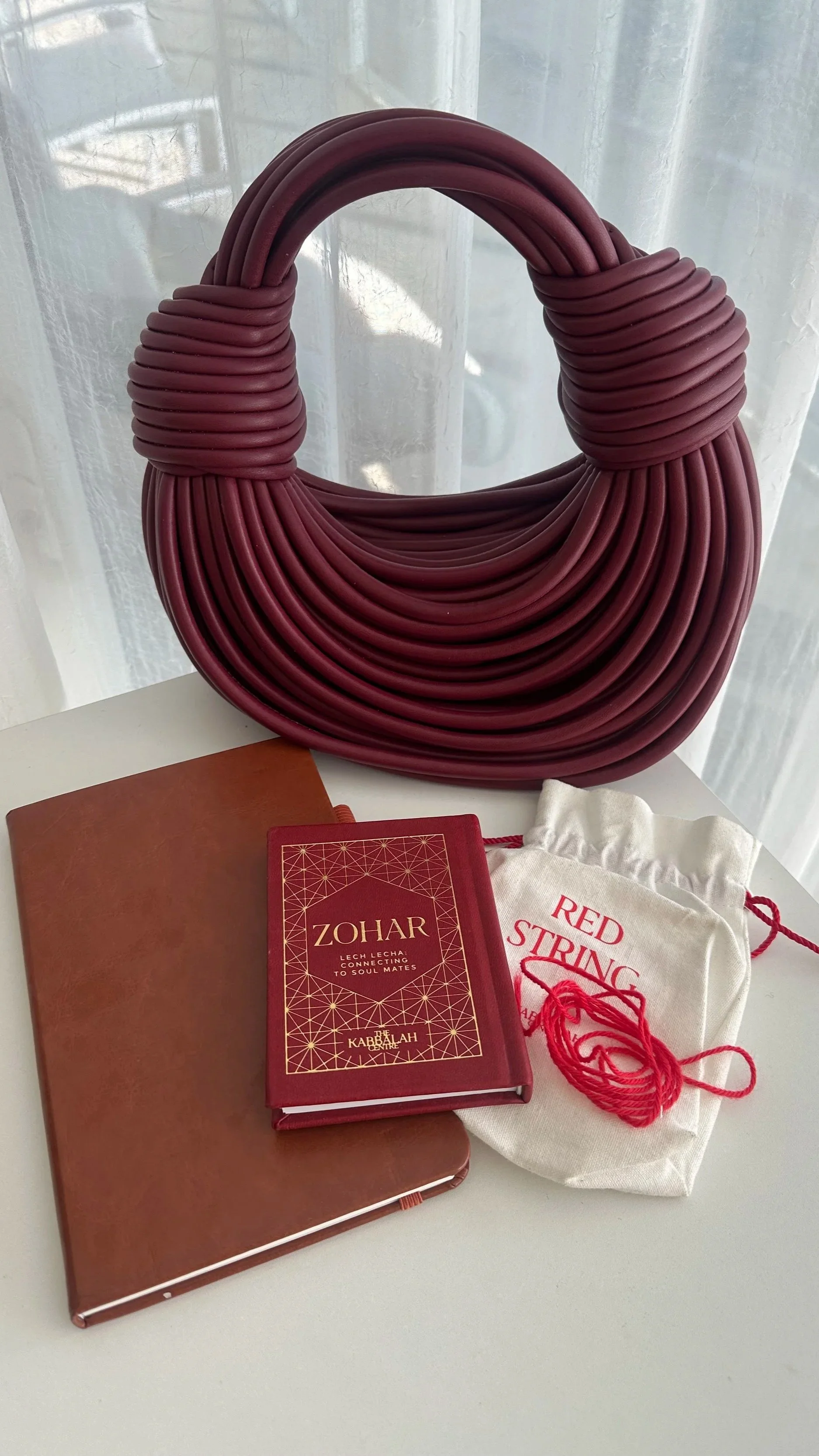
I’ve always been drawn to work and practices that help me heal, grow, and become the woman I know I’m here to be. That pull has been with me for as long as I can remember. But if I’m being honest, the work didn’t always come from presence. For much of my life, I learned how to check out rather than check in. Sometimes that looked like staying busy, productive, and high-functioning. Other times, it looked like numbing out entirely. Distracting myself. Skipping past my inner life because it felt easier, or safer, not to linger there.
That curiosity, paired with a real desire to live well, is what eventually led me to create a blog centered on career, wellness, spirituality, and personal evolution. Over the years, it’s also led me through therapy, coaching, meditation, manifestation work, somatic practices, breathwork, supplements, protocols, retreats, journaling, and plant medicine. Not because anything was broken, but because healing is layered. Growth is layered. Becoming yourself doesn’t happen through a single doorway.
I don’t approach this work as a trend or a checklist. I approach it as a relationship with myself. A way of understanding my patterns, softening the ones that no longer serve me, and strengthening the parts of me that are meant to lead. At this point in my life, I’m far less interested in bypassing and far more interested in practices that actually change how I show up, especially in the quiet moments when no one else is watching.
So when Kabbalah began quietly resurfacing in my awareness, not loudly or performatively, but in a way that felt grounded and intentional, I paid attention. I didn’t expect it to become such a central part of my life. I certainly didn’t expect it to shift me as deeply as it has. But Kabbalah has become one of the most impactful spiritual frameworks I’ve worked with. The closest comparison I can make is plant medicine, without the plants or the medicine. No ceremony. No altered states. Just a profound shift in how you understand yourself, your experiences, and your role in shaping your life.
When Kabbalah First Entered My Orbit
Like many people, I had heard of Kabbalah long before it ever became personal. In the early 2000s, when Madonna brought it into the mainstream, it felt intriguing but distant. A little mysterious. A little inaccessible. I was curious enough to attend a class at the Kabbalah Centre in New York at the time, but it didn’t land. There was no spark, no sense of recognition, no internal yes.
Looking back, that makes perfect sense. Most meaningful spiritual work doesn’t arrive when it’s fashionable or intellectually interesting. It arrives when your life has created the conditions for it. When you’re no longer searching for answers outside yourself, but you are finally willing to stay present with the questions.
The Reintroduction That Changed Everything
In late 2024, Kabbalah found its way back into my orbit at a moment when I genuinely needed something to help me find myself again. I had just gone through a corporate layoff, one of those experiences that quietly destabilizes your sense of identity and forward momentum, and not long after, I lost my father. Grief has a way of rearranging everything you think is solid. Together, those two moments created a kind of emotional and existential pause I hadn’t planned for, but couldn’t ignore.
I wasn’t looking for an escape or a quick fix. I wasn’t trying to transcend my grief or reframe it away. I was looking for something that could help me orient myself again. Something that offered structure, meaning, and a way to engage with life rather than retreat from it.
Around that time, I began hearing the teachings of David Ghiyam referenced by some of the wellness and spiritual voices I respect most. I followed him casually at first, listening without expectation. What struck me immediately was how grounded his approach felt. This wasn’t spirituality that floated above real life or tried to smooth over pain. It was practical, direct, and deeply human.
Listening to him felt less like attending a lecture and more like having a smart, self-aware friend explain how the universe actually works. Not a guru speaking from a pedestal, but someone in your own age range who has lived life, navigated relationships, ambition, loss, and uncertainty, and can speak about spirituality without abstraction. While also making it something that could be funny. It felt like the kind of conversation you have late at night with a friend who doesn’t try to fix you, but somehow leaves you feeling steadier. Clearer. Less alone in the questions you’re already carrying.
After following his work for a while, I signed up for Kabbalah One. I appreciated that it was pay what you can, which made the decision feel uncomplicated. What did I really have to lose other than a few dollars? What I didn’t realize at the time was how much I was about to gain.
Falling In Fully
Kabbalah One is a series of pre-recorded classes, each about an hour long, recorded years ago but uncannily well timed for my life. I listened every single day. On walks. In the mornings. In the evenings. This wasn’t discipline or devotion. It was fascination. Obsession, even. For the first time in a long time, I felt mentally and spiritually engaged in a way that made everything else feel secondary. This framework was giving language to patterns, reactions, and inner dynamics I had sensed for years but had never been able to organize so clearly.
Without trying to simplify my life, everything else naturally fell away. Podcasts stopped holding my attention. Television felt irrelevant. Even reading took a back seat. For several months, this was simply where my focus lived. Not forever, not in an all-consuming way, but in that very particular, electric period when something new clicks and you want to understand it from every angle.
I moved straight into Kabbalah Two and then Kabbalah Three, and before I knew it, much of the year had passed with this work as a steady, grounding presence in my daily life. It didn’t feel overwhelming or preachy. It felt stabilizing. Like having a framework to return to while everything else in my life was in motion.
When David started a tour of live speaking engagements and came to Miami, I went with one of my close girlfriends. We walked out of that first workshop feeling genuinely altered, like we had jumped timelines. For weeks afterward, we couldn’t stop talking about it. Not in a starry-eyed way, but in a “wait, did you hear that too?” way. It felt like a spiritual upgrade that sharpened how we saw our lives, our patterns, and our responsibility for how we move through the world.
Around that same time, I discovered there was a Kabbalah Center here in Miami. While the coursework itself had already been impactful, what surprised me most was the community. Weekly Shabbats. New Moon and Full Moon gatherings. Even game nights. Nothing ever felt forced or obligatory. It was very much a come if you can, come if it resonates atmosphere.
Through that openness, I met some of the most incredible like-minded people. The friendships formed naturally, without performance or pressure, grounded in shared curiosity rather than ideology. The head teacher there, Ariel, and his wife Shulamit have created a space that feels warm, grounded, and deeply human. It’s serious spiritual work, but it’s also social, alive, and integrated into real life. Less about subscribing to a belief system, and more about belonging to a community that actually lives the work.
Kabbalah As A Spiritual Framework
What ultimately drew me in, and what has kept me engaged, is the way Kabbalah approaches spirituality as a framework rather than an escape. It doesn’t ask you to transcend your humanity or rise above real life. It asks you to understand it. Consciousness, in Kabbalah, isn’t abstract or mystical for mysticism’s sake. It’s something you can observe, refine, and work with over time.
Kabbalah teaches that the universe operates according to spiritual laws, just as the physical world operates according to natural ones. When you understand those laws, you stop fighting your reality and start participating in it more intentionally. This isn’t about control or manifesting your way out of discomfort. It’s about awareness. About recognizing that how you meet life matters just as much as what happens.
At its core, Kabbalah is about becoming the person you were meant to be, not by bypassing your patterns or polishing your personality, but by engaging with your inner world more honestly.
The Basic Concepts
At the heart of Kabbalah is the idea of the Light, which represents the source of all fulfillment. Love, clarity, joy, creativity, abundance. The Light’s nature is to give endlessly. The work is not about chasing it, earning it, or forcing it to arrive, but about becoming capable of receiving it without sabotaging ourselves in the process. That distinction alone quietly reframes how you relate to desire, effort, and worth.
Which is where the concept of the vessel comes in. The vessel is our consciousness. Our thoughts, reactions, habits, and internal narratives determine how much Light we can actually hold. In practical terms, this means that the more reactive, defensive, or self-protective we are, the less space we create for fulfillment to land. Refining the vessel isn’t about perfection. It’s about awareness. It’s the slow, unglamorous work of noticing how you respond to life and choosing differently when you can.
Kabbalah also introduces the idea of tikkun, the specific patterns each of us came here to transform. For some people it shows up as self-worth. For others, control, scarcity, people-pleasing, or the need for external validation. Understanding your tikkun changes the way you experience challenges. What once felt like punishment or bad luck begins to look more like curriculum. Not something to judge yourself for, but something to work with.
Restriction is one of the most practical tools in the work, and also one of the most challenging. It’s the practice of creating space between stimulus and response. Not reacting immediately. Not obeying every impulse. Restriction isn’t suppression or denial. It’s discernment. It’s the choice to pause, to ask a better question, and to respond from consciousness rather than habit. Over time, this alone can change how you move through your entire life.
Certainty, in Kabbalah, is not blind optimism or spiritual bypassing. It’s the understanding that even the uncomfortable moments are here to reveal more Light. Especially the uncomfortable moments. Certainty doesn’t mean you like what’s happening or that clarity arrives on demand. It means trusting the process even when the meaning hasn’t revealed itself yet.
Prayer, finally, is simply communication with the Creator. Not performance. Not recitation. Honest conversation. Asking not just for what you want, but for help in becoming better. More patient. More open. More aligned. In that sense, prayer becomes less about outcomes and more about orientation.
What Changed Most For Me
The most noticeable shift for me has been a quiet but profound change in how I relate to my own life. I no longer experience things as simply happening to me. There’s far less narrative around victimhood, unfairness, or “why is this happening again.” Instead, there’s a growing ability to look at both the good and the uncomfortable as opportunities to expand, refine, and grow.
I’m less reactive than I used to be. There’s more space between what happens and how I respond. I don’t feel the same urgency to defend myself, explain my choices, or manage other people’s perceptions. That alone has brought an unexpected sense of calm.
I also care significantly less about external validation. Not in a performative, detached way, but in a grounded one. There’s a deeper internal reference point now, something steadier to return to when things feel uncertain. I’ve learned to lean into trust and certainty rather than fear or overthinking, even when I don’t yet have the full picture.
Life feels less finite than it once did. Less rigid. Less linear. Each day feels like another opportunity to choose consciousness over habit, intention over autopilot. Kabbalah didn’t make my life easier or remove discomfort. What it did was give me a framework for meeting life with more clarity, resilience, and responsibility. And that has changed everything.
If You’re Curious
If any of this resonates, the work is remarkably accessible. The Kabbalah Center has locations in cities across the U.S. and around the world, but just as much of the learning now lives online. There is an incredible amount of recorded and live content available, from structured courses to weekly teachings. Personally, I actually prefer the online format. I like being able to listen while I walk, cook, or move through my day. It allows the work to integrate into real life rather than requiring a separate container.
There are also podcasts worth exploring, like Spiritually Hungry and the Weekly Energy Forecast, which offer an easy entry point into the teachings and how they apply to everyday life. And I truly cannot recommend David Ghiyam’s work enough. His teachings have been genuinely life-changing for me, and much of what he offers through yourinfinitesoul.com is available on a pay-what-you-can basis, which makes the work feel both generous and accessible.
Beyond that, there’s no shortage of books, articles, and resources if you want to go deeper. There’s no pressure to commit or identify yourself in any particular way. You can simply explore, listen, and see what lands.
I share this because it has had a profound impact on my life. My hope is that, if this work finds you at the right moment, it supports you as deeply as it has supported me.