When Did Functional Medicine Become Dysfunctional
There was a period of my life when I could stay out until four in the morning, drink an amount of alcohol I would now consider medically noteworthy, eat pizza on the way home, sleep for three hours, and show up at work the next morning relatively unconcerned with my mitochondrial function. I’m not saying I felt good. I almost certainly felt terrible. I just thought that was life. I was in my twenties and thirties, I lived in New York, I had a stressful job, I went out too much, and feeling vaguely exhausted was less a medical condition than a personality trait shared by everyone I knew.
Now, if I stay out a little too late or have a particularly indulgent dinner on a Tuesday, by Wednesday morning I am conducting a small internal investigation. Was it the gluten? The histamine? The sleep? My cortisol? Am I working too much? Should I quit my job? Is this somehow related to childhood trauma I was under the impression I had already addressed? Somewhere in the last few years, I have become extraordinarily good at noticing how I feel and increasingly rigid about making sure I feel good. And lately I’ve started wondering whether the amount of effort I put into feeling good might, occasionally, be making me feel worse.
To be clear, this is not my entry into the anti-optimization movement. Fuck alcohol. I feel infinitely better without it and have no desire to revisit that research. You will also have to pry my Oura Ring from my cold, well-rested hand. I like knowing that my sleep is improving. I like exercising, eating in a way that keeps inflammation down, understanding my hormones, and generally having more information about my body than I did when I considered a bagel and three hours of sleep adequate preparation for a workday. Wellness has made my life better in very real ways, and I remain unapologetically interested in it.
But there is one particular wellness rabbit hole I seem to have fallen very, very far down: functional medicine. This is slightly awkward to admit because I used to think functional medicine was one of the best things to happen to healthcare. I was the person quietly judging people who still relied exclusively on conventional doctors. What do you mean your doctor just gave you medication? Aren’t you going to figure out why this is happening? What about the root cause? I believed, and to a large extent still believe, in the philosophy behind it: look at the whole person, understand how different systems in the body interact, investigate why someone feels unwell instead of simply suppressing the symptom and sending her on her way.
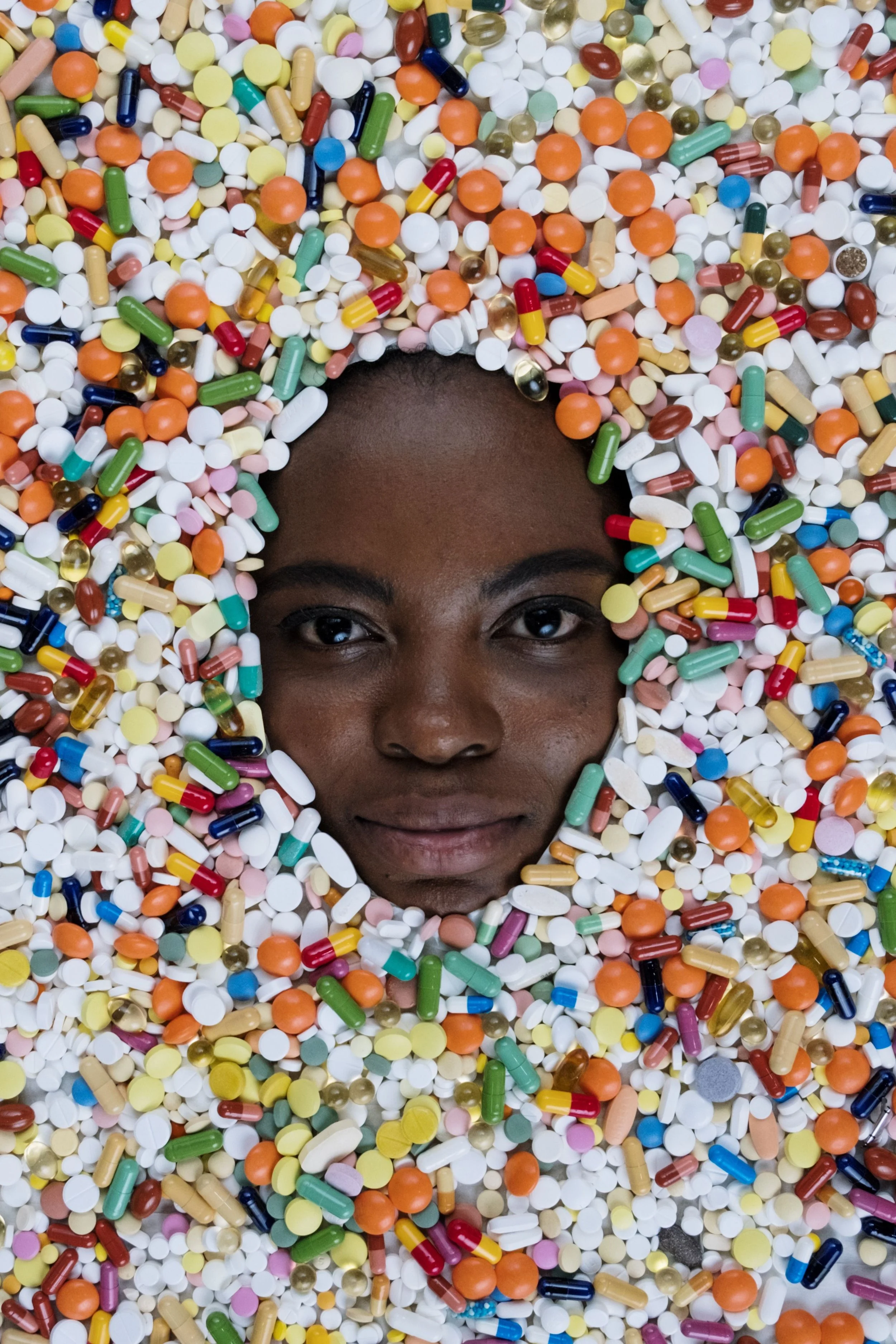
Except somewhere along the way, I got onto what I can only describe as the functional medicine merry-go-round. I don’t feel well, so I find another expensive practitioner who promises to finally look at me as an individual. I send over years of medical records and arrive with the optimism of a woman who thinks this time someone is going to connect all the dots. Then come the tests. Then the supplements. Then the peptides, hormones, IVs, detoxes, cleanses and protocols. Then I become overwhelmed, my body becomes overwhelmed, my bank account becomes considerably lighter, and at some point I realize I’m no longer entirely sure what we are treating. So I stop because I’m not feeling any better. Eventually I start to believe the next doctor will be different, will see me, and I get back on the ride.
The uncomfortable part is that functional medicine once genuinely helped me, which is probably why it has taken me so long to question my relationship with it.
How I Became a Functional Medicine Person
In 2019, I was living in NYC when a pipe burst in my apartment in the middle of the night. And when I say burst, I do not mean an elegant little leak discovered beneath the sink. I mean water shooting through the ceiling lights at three o’clock in the morning while I ran around my apartment in Wellington boots, on the phone with my mother, attempting to manage a situation for which I possessed neither the equipment nor the emotional constitution.
Eventually the water stopped, insurance got involved, things dried out, and life moved on. What I didn’t understand at the time was that water had gotten underneath the wood floors and they needed to be replaced. They weren’t. Mold developed, and eventually I became extremely sick.
This was before mold illness had become quite as fluent a part of the wellness lexicon as it is now. I was exhausted in a way that sleep didn’t fix, cognitively impaired to the point that I sometimes struggled to retrieve basic information, and generally felt like my brain had quietly left the building. I eventually learned that I was one of the lucky people with a genetic susceptibility that can make certain mold exposures more difficult to tolerate, and I started looking for doctors who understood what I was experiencing.
That search brought me into functional medicine, and in the beginning, it felt revolutionary. I found functional doctors who understood mold when many conventional physicians barely wanted to discuss it. They talked about inflammation, immune function, environmental exposure and the body as an interconnected system. I went through mold protocols, parasite protocols, supplements and all sorts of things I had previously never heard of. Not everything worked, and some of it was confusing, but some of it genuinely helped. More importantly, I learned how to think about my health differently. I started to understand my specific make-up and what my body needed in order to work best.
There were cracks in the model even then. Functional medicine was excellent when I needed someone to spend an hour thinking about why I had been chronically unwell; it was considerably less excellent when I ended up in the hospital with pneumonia and discovered that the practitioner managing my long-term health wasn’t someone I could necessarily reach when I was acutely sick. I started to understand that perhaps conventional and functional medicine solved different problems. Still, at that point, I was very much a believer.
And then, slowly, something started to feel different.
Somewhere Along the Way I Became a Lead
One of the first moments that really gave me pause came through an Instagram ad from a very well-known functional medicine doctor. I’m not going to name him because this isn’t an exposé and I have no interest in spending the rest of my week fielding angry emails from wellness publicists, but let’s just say he was a Goop-approved favorite.
The ad was for an inexpensive at-home toxicity test, around $100 if I remember correctly, that promised to give you some insight into your toxic burden. Even better, the purchase included a consultation with one of the coaches trained in this doctor’s methodology who would walk you through the results and explain what you could do about them. Honestly, it sounded great, so I bought it.
What followed was one of the strangest “health consultations” I have ever had. Instead of spending the call helping me understand my results, the coach spent the better part of an hour aggressively trying to sell me into a program that cost somewhere around $10,000. I had a work meeting and repeatedly tried to end the Zoom. He kept going. When I said I wasn’t prepared to enroll, the pitch became increasingly ominous: If I didn’t sign up for this program then and there then I would never heal. That I must not truly care about my own health. They had the data to prove this. These were his exact words. I’m betting Gwyneth Paltrow wasn’t pitched in that way.
I remember hanging up feeling embarrassed more than anything else. You fell for an Instagram funnel, I told myself. You should know better. You saw the famous doctor, the sleek branding, the inexpensive test and the promise of personalized insight, and you clicked. Fine. Lesson learned.
Except then I started noticing versions of the same dynamic in places that didn’t look anything like an Instagram funnel.
The $2,000-a-Week Path to…Something
Last year, I started seeing another functional medicine practitioner in West Palm Beach. This wasn’t an impulse purchase from Instagram. I was referred to her by a friend who said she had greatly helped her. I had consultations. I ran specific labs. I brought in my history. I was looking for someone to help me understand why I still didn’t consistently feel well.
What followed was an extraordinary number of interventions in a remarkably short period of time: hormones, thyroid medication, peptides, IVs, supplements and treatments. I was spending thousands of dollars and trying to dutifully follow a protocol that seemed to expand every time I walked through the door. The strange thing was that at some point I could no longer clearly articulate what, exactly, we were healing.
There were markers we were optimizing and symptoms we were addressing and biological systems we were supporting, but I had somehow gone from wanting to feel better to managing what felt like a small pharmaceutical startup operating out of my kitchen. There were things to take in the morning, things to inject, things to do at night, things to refrigerate, things not to combine with other things. The weekly cost could approach $2,000, which raised another fairly obvious question: even if all of this worked, what exactly was the long-term plan? Was optimal health now a subscription service?
Then I started feeling terrible. The protocol was overstimulating me to the point that I finally called the practice and said I needed to speak with the doctor about what was happening. I had already spent thousands of dollars on the treatments she had prescribed, so I assumed discussing a significant reaction to those treatments would be part of, you know, the treatment.
It would be $200 for 15 minutes.
That was around the point when I lost my shit. Not because doctors shouldn’t charge for their time. Of course they should. But I had reached this surreal place where I had paid thousands of dollars to be put on an extraordinarily complicated medical protocol, felt worse on that protocol, and now needed to pay again for the privilege of telling the person who prescribed it that I felt worse.
So I did what I have unfortunately become very good at doing with functional medicine. I gave up. I stopped most of it, went back to the basics that I knew made me feel better, and told myself I had learned my lesson. I hadn’t.
The Consultation That Finally Gave Me the Full Body Ick
Recently, after another stretch of not feeling like myself, I decided to try again. This time I chose a well-known functional medicine practice in Miami. I paid roughly $1,000 for the initial consultation and, before the appointment, sent over years of medical records and previous testing. More importantly, I explained my history. I told them about the massive protocols, how overwhelmed I had become, and that I absolutely did not want to repeat the cycle of spending thousands of dollars, starting twelve things at once and having no idea which one was helping, hurting or doing absolutely nothing. I was essentially saying: Please don’t put me back on the merry-go-round. They assured me that wouldn’t be the case.
Then came the proposed plan: roughly $8,000 in testing, supplements and services that I was told were necessary to properly diagnose me and figure out how to help me heal. And there I was again. Oh my God. Not again.
The testing was what finally gave me the full body ick. Before booking the consultation, I had specifically asked whether they could work with standard bloodwork through places like Quest and was told they could. Afterward, I was told the bloodwork I could get through Quest wasn’t accurate enough and that I needed their specific testing instead. These tests were presented as critical to understanding what was wrong with me, even though I couldn’t get a clear explanation for why my existing labs and medical history pointed to some of the conditions they wanted to investigate.
Then I looked up the tests myself. One that I was being charged roughly $1,800 for appeared to cost about $900 directly. The price had essentially been doubled. And suddenly I wasn't just questioning whether I needed the test. I was questioning the recommendation itself.
That was the part that really bothered me. I understand that medical practices are businesses. Doctors deserve to make money. Expertise has value. But when you're telling a patient that a particular test is medically necessary, telling her the more accessible version isn't reliable enough, and then charging roughly twice the price for the version you're recommending, how is she supposed to know where the medical advice ends and the business model begins?
And once I was asking myself that question, the trust was gone. I had paid $1,000 to tell another functional medicine practice that I was exhausted by being overtested, overtreated, overwhelmed and overcharged by functional medicine. Their proposed solution was approximately $8,000 more functional medicine. You really do have to laugh.
So, When Did Functional Medicine Become So Dysfunctional?
This is where I want to be careful, because I can already imagine the emails. I am not saying functional medicine is a scam, and I am certainly not saying every functional practitioner operates this way. Some have helped me enormously, particularly at a time when conventional medicine didn’t have very satisfying answers for what I was experiencing. I still believe in looking for root causes. I still believe nutrition matters, environment matters, hormones matter, stress matters, and our medical system has historically done a spectacularly mediocre job of taking women’s symptoms seriously.
But I am disillusioned. Strangely, I’m now almost as disillusioned with functional medicine as I once was with conventional medicine.
The irony isn’t lost on me. I went looking for an alternative because I was frustrated with a system that could feel impersonal, rushed and overly reliant on medication. I wanted healthcare that saw the whole person instead of a collection of symptoms. Now I sometimes find myself wondering whether we’ve created another system with its own set of perverse incentives. Except instead of leaving with a prescription, I’m leaving with six supplements, four specialty tests, three peptides, an IV package and a gentle suggestion that there may be something toxic lurking inside me that we can investigate for another $1,800.
Maybe that is the uncomfortable conversation I actually want to have. Not whether functional medicine is good and Western medicine is bad, or Western medicine is legitimate and everything outside of it is snake oil. I don’t believe either of those things. Real life is annoyingly less binary.
What I want to know is whether other women who entered this world because they wanted to take responsibility for their health have quietly started feeling the same exhaustion I have. Whether anyone else has looked at the latest stack of supplements on her counter and thought, I genuinely have no fucking idea what I’m doing anymore. Whether anyone else has wondered how “personalized medicine” somehow keeps producing remarkably similar protocols, or why asking questions about price can suddenly make you feel as though you’re insufficiently committed to your own healing.
Because that, more than anything, is where I’ve landed. I’m tired of outsourcing my body to the next person who promises to finally explain it to me. I’m tired of believing there is always one more hidden thing to uncover before I can feel well. I’m tired of spending thousands of dollars, becoming overwhelmed by the solution, abandoning the solution and eventually beginning the search for another solution. And perhaps most of all, I’m tired of treating every imperfect day in my body as evidence that there is another problem I haven’t found yet.
I’m not breaking up with functional medicine. Let’s not get dramatic. I know myself well enough to know there is a decent chance I will see another functional practitioner at some point, and I hope that when I do, I find one of the very good ones. I still want medicine that asks why. I still want practitioners who listen. I still want access to ideas that exist outside the narrowest definition of conventional care.
I just don’t want another health guru.