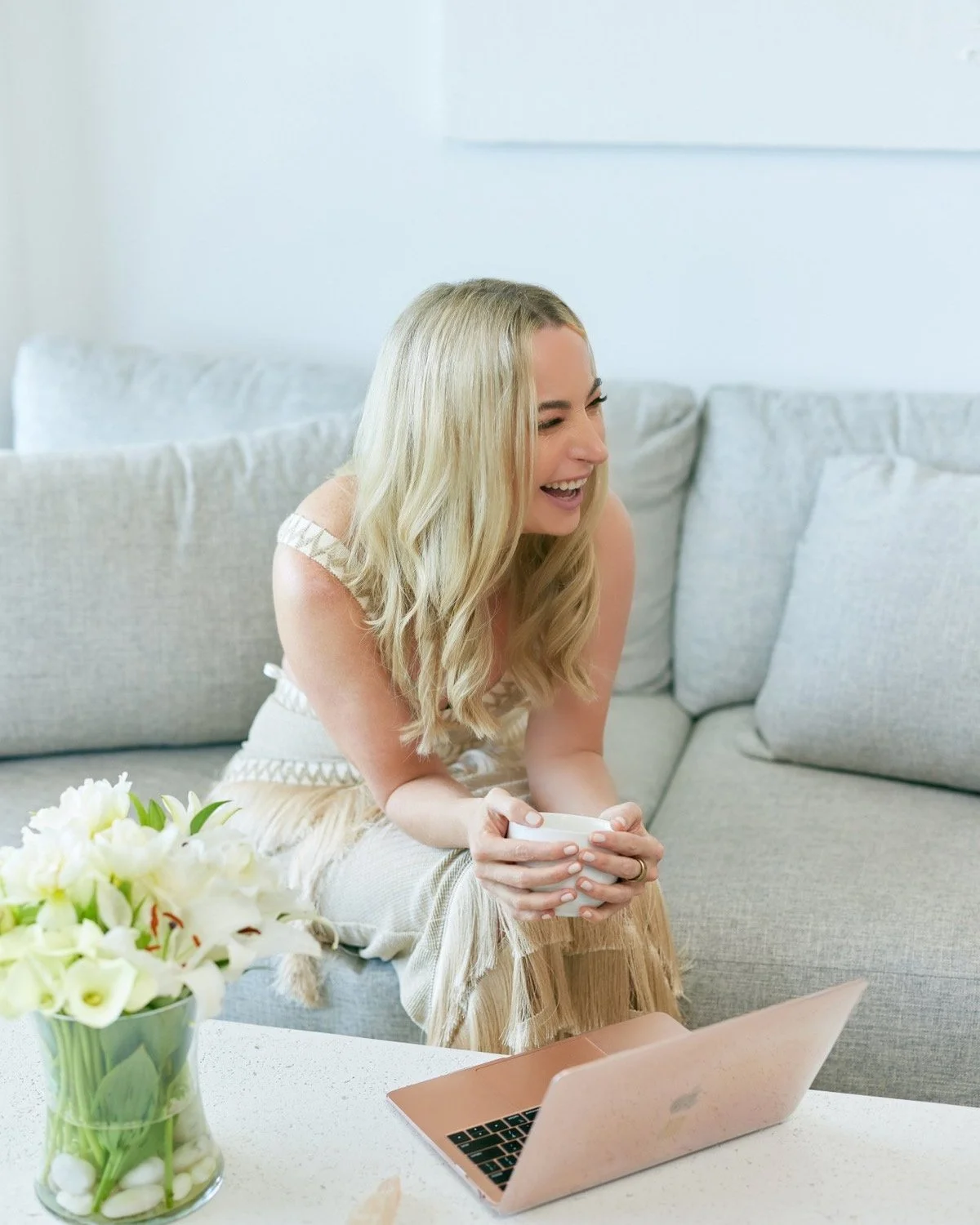
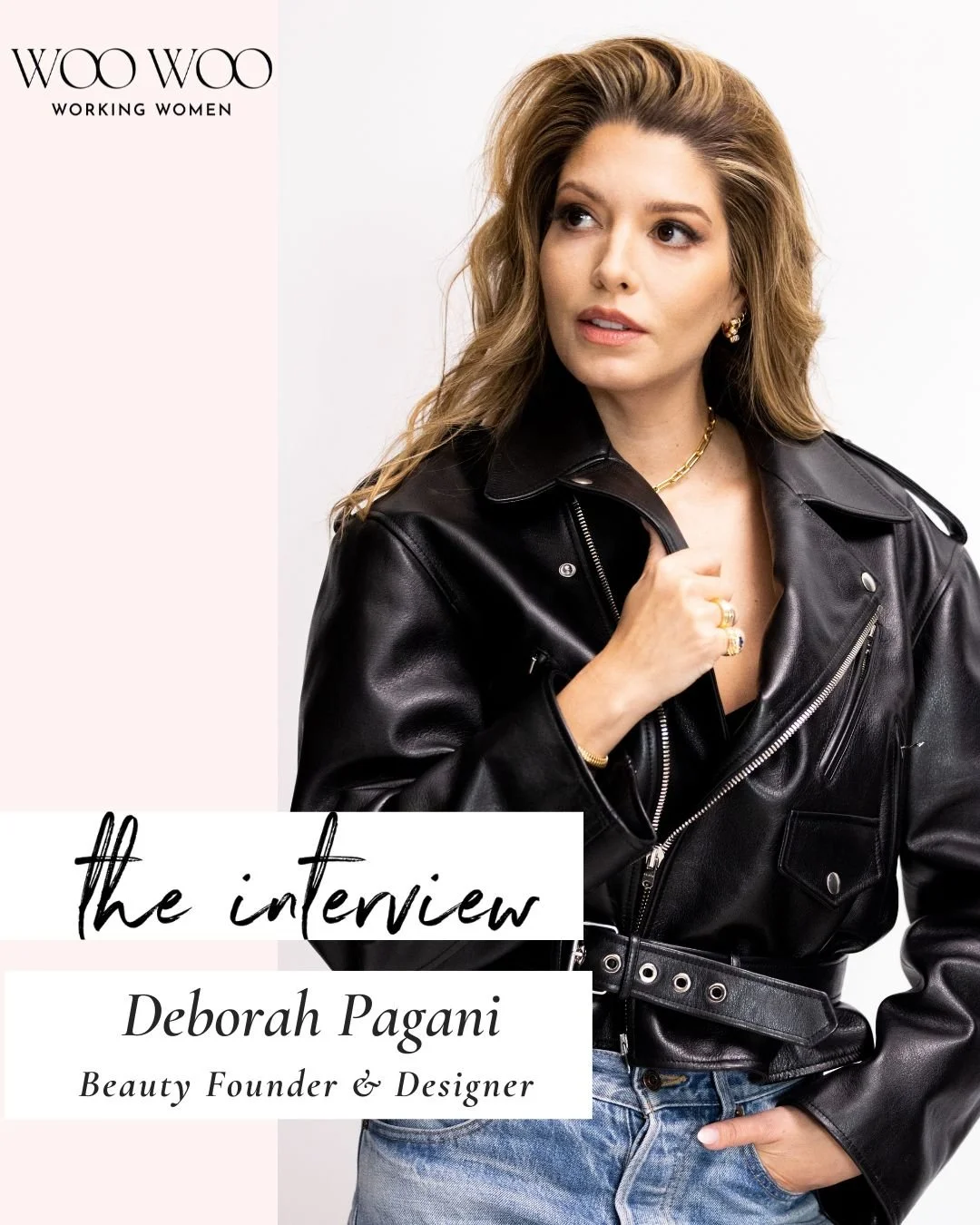
Deborah Pagani, Beauty Founder & Designer
Deborah Pagani is not simply part of the beauty world. She is a woman who has built a distinct point of view across it. With a career that spans hair, fine jewelry, and now clean, high-performing haircare, Deborah has created a body of work defined by taste, intention, and consistency. Her pieces are worn by women like Rihanna and Rosie Huntington-Whiteley, and her signature hair pins have become a defining accessory for women who appreciate quiet luxury and considered design. What sets her apart is not just what she creates, but how she creates it. She does not follow trends or build for speed. She builds with clarity, restraint, and a deep understanding of what women actually return to.
Her story began in New York City, working as a young colorist under industry legends like Oribe Canales and John Sahag at a time when beauty was shaped by discipline, not algorithms. That environment set her standards early. But it was pregnancy that became the turning point. As her awareness around chemical exposure grew, she began listening more closely to her body and ultimately stepped away from the salon to build something of her own. What followed was a series of intentional expansions. From fine jewelry to her now-iconic hair accessories, and most recently to Deborah Pagani Beauty, her clean haircare line, each chapter has built on the last with focus and purpose.
Now in Miami, Deborah continues to build while raising three children, speaking openly about pressure, balance, and what it takes to sustain both a life and a business over time. In this conversation, she shares how she has learned to trust her instinct, why not every idea is worth pursuing, and what it means to create something that lasts. For the woman navigating growth, change, or the desire to build something of her own, Deborah offers a perspective that feels both grounded and deeply aspirational.
What does a vibrant, aligned, and deeply fulfilling life look like to you now in this season of life?
Right now, a vibrant and aligned life looks very edited. It’s about doing fewer things, but doing them with care and intention. After years of working across hair, beauty, and jewelry, I trust my taste and experience more than momentum.
That philosophy carries directly into how I build. I didn’t start my brand to flip it or race toward an exit. I started it because I genuinely want to be working, building, and refining for a long time. I’m not interested in shortcuts or creating things just because the market says it’s time.
I care about trust with the customer and creating products that are worthy of my name. Things I want to use myself, and that women come back to because they work and feel considered, not because they’re trendy. I care less about doing more, and more about doing things properly.
You move between so many roles—designer, founder, mother, creative, partner—with such direction and ease. What helps you stay focused and grounded when life is full?
I’m grateful that it might look like I carry everything with ease, but the truth is, it’s not easy. As I’ve gotten older and my body has changed, I feel the weight of holding multiple roles more profoundly. Being a founder, a mother, and a partner can be incredibly stressful, and I don’t pretend or make light of any of it.
I take my health seriously, but I also fall off the rails many, many times. What I’ve learned is how to fall with grace. It’s never about perfection. I see so many people preaching rigid routines or one-size-fits-all solutions, and I don’t think that’s sustainable or honest.
For me, wellness is about getting back on every time. Paying attention, adjusting, and returning without guilt. Movement, support, and small habits that fit real life. None of it makes things effortless, but it helps me stay grounded and keep going—and that’s what matters to me.
Is there a Woo Woo Working Woman, in your field or beyond, whose passion, purpose, and presence inspire you? What have you learned from her?
Hands down, Martha Stewart. She’s nonstop. Constantly launching, constantly evolving, never stuck in one version of herself, and she does it all with so much composure. I love the way she speaks. I could honestly listen to her all day. She’s the kind of mentor I wish I’d had early on. There’s such clarity and authority in how she moves through the world.
I’m also deeply inspired by Kelly Wearstler. I admire how she weaves everything together motherhood, being a wife, living beautifully, and still delivering at the highest level for her clients. It feels integrated, not performative.
What inspires me most about both of them is that nothing feels forced. They’ve built lives and careers that are layered, enduring, and deeply personal. They haven’t diluted themselves to do it.
Was there a moment that changed how you saw yourself or what you believed was possible for you?
It wasn’t one defining moment for me. It was cumulative. Life has a way of layering experiences until your perspective shifts. I’m a mother of three, and I have a teenage daughter heading to college soon, so I’m very conscious of what I’m modeling. I don’t want my kids to think growth has an expiration date or that you have to make all the right decisions early and then live inside them forever.
When I launched hair accessories, most people knew me strictly as a jewelry designer. I was told more than once that it wasn’t the right move, that it was too adjacent, too niche, or not serious enough. But it came from a very real place. It was something I loved, something I understood intuitively, and something I felt was missing.
Watching that category take off and continue to sell daily reinforced something important. When you build from an authentic place, when you create things that are true to your eye and experience, people feel that. It resonates in a way that strategy alone never can. If anything, I feel like I’m just cracking the surface now, not starting over but expanding. And I want my kids to see that curiosity, evolution, and self-trust don’t fade with time. They deepen.
You began your career in the beauty world as a colorist working under legends like Oribe and John Sahag. What did that early environment teach you about discipline, taste, and self-expectation?
The beauty world I entered in the late ’90s and early 2000s was simply different. There was no social media. Everything moved through word of mouth and the authority of magazines. You could be living in the suburbs, pick up Vogue, and read about figures like Oribe Canales or John Sahag, and they felt almost untouchable because access was so limited.
Oribe was high fashion and high glamour. He represented the world of ’90s supermodels, polished, editorial, elevated. John was rock and roll downtown, raw and disruptive. Two completely different energies, both operating at the highest level of their craft. Being exposed to those worlds so early shaped my eye in a very specific way. You learned discipline by observing how seriously beauty was treated, not just the work itself, but the presentation, the standards, the self-expectation. How you showed up mattered.
Coming from suburban New Jersey and suddenly finding myself on Madison Avenue and Fifth Avenue was formative. It’s where my understanding of taste, rigor, and the luxury world truly began. I wouldn’t trade that education for anything. It set the foundation for how I build, how I edit, and how I expect things to last.
Pregnancy heightened your awareness around chemical exposure and became a catalyst for change. How did listening to your body influence your work and your life and what helped you trust the signals instead of ignoring them?
Pregnancy heightened my awareness, but it didn’t come out of nowhere. I was always complaining about the smell of the chemicals, especially formaldehyde. I’d get constant headaches. I was the one opening windows in the dead of winter while everyone else complained. My body was pushing back, even if I wasn’t fully listening yet. I guess that’s also where my obsession with scent comes from.
Being pregnant forced me to slow down and really listen to my gut. At the same time, I had ended up in the hair world somewhat by circumstance. I wanted to do something creative, but fashion or art school wasn’t financially available or supported, and at that age I didn’t yet have the maturity to navigate it on my own. What I did know was that I wanted to be in New York, doing something creative, in a world that felt alive.
Hair became my way in. And pregnancy became the moment I realized I had permission to choose differently.
You’ve expanded across hair, jewelry, and beauty without abandoning any part of yourself or your brand. How do you discern when to move forward on an idea? Is the courage to move forward something you’ve always trusted or learned to build over time?
I don’t move forward on ideas casually. I move when something haunts me, in the best way. Over time, I’ve learned to trust discernment more than adrenaline. When an idea is right, it isn’t loud or impulsive. It’s persistent. It shows up again and again until it becomes impossible to ignore. That clarity has come from years of doing the work, making mistakes, and paying attention.
With beauty, it came from a very honest place. I wasn’t inspired by what was out there. So much of it felt generic and interchangeable. I wanted to simplify, but I also wanted to create something deeply considered. Objects with intention, history, and permanence. Something that could quietly hold my entire world together: hair, jewelry, and design. I’m grateful I’ve been able to build across categories without abandoning any part of myself. That freedom didn’t happen overnight. It was earned through experience, listening carefully, and trusting my eye while staying open to learning.
The confidence to move forward wasn’t innate. It was built, decision by decision. Each time I followed that quiet, persistent instinct and executed with care, that trust deepened. I’m still refining and still expanding, but I know when something belongs in my universe. Haircare isn’t an endpoint for me. It’s part of a much larger creative world I feel fortunate to be building.
Many women feel pressure to constantly reinvent themselves or keep up. What would you tell women about longevity, patience, and building something that actually lasts?
I’m the first to say I’m a work in progress. I’m always refining, professionally, physically, and as a mother. For me, longevity has come from accepting that you can’t be everything at one hundred percent all the time. There are seasons when work takes over and seasons when family does. Fighting that reality only creates burnout. Learning to move through it with grace is what actually allows things to last.
I’ve learned, sometimes the hard way, that beating yourself up doesn’t serve anyone. Not your family, not your business, not the people who rely on you. When things feel overwhelming, the most productive thing you can do is pause, reassess, and calm your nervous system. Clarity follows.
One functional doctor once said to me that it sounded like the adult version of me was sitting in the backseat while the anxious child was driving. That stuck. Longevity comes from putting the experienced driver back in control and trusting that you’ve been here before and know how to navigate it. Building something that lasts isn’t about constant reinvention. It’s about patience, self-trust, and knowing that steadiness will always outperform panic.
You’ve spoken openly about therapy, healing, and the support you’ve received through wellness practitioners. What role has emotional healing played in your creative clarity?
I don’t think therapy made me more creative. It helped me understand myself, my anxiety, my upbringing, and how much of what I was carrying wasn’t actually mine. Once I saw that, it changed how much power those thoughts had. They’re still there sometimes, but they’re not driving. That’s where the clarity came from. Not new ideas, but more trust. Less spiraling. More confidence in my point of view. Emotional healing didn’t change what I create. It changed how firmly I stand behind it.
When life feels overwhelming what practices reliably bring you back into your body and your intuition?
When life feels overwhelming, I’ve learned to look at it holistically. It’s usually not one thing. It’s where I am in my cycle, my workload, deadlines, and the mental load. Everything compounds. What reliably brings me back into my body is a physical reset. Red light therapy, infrared sauna, and cryotherapy, ideally all in the same day. There’s something about that deep cold that cuts through the noise.
I also know when I need to get out of my own head. Changing scenery, being with my husband or close friends, pulling myself out of that internal loop. Stepping back into perspective always brings me home to myself.
As a woman, what is the single best piece of health advice you’ve ever received — the kind that changed how you care for your body or make decisions?
Don’t ignore your blood work. Don’t put it off. And don’t ignore pain. Every time I’ve tried to push through something for too long, my body eventually caught up with me. I’d finally get blood work done and everything would be off—hormones, inflammation, all of it. That’s been a real lesson for me. Pain isn’t something to normalize or work around. It’s information. The sooner you listen, the easier it is to course correct.
Absolute favorite leaders and experts to follow for beauty, health, and wellness?
I’m very selective. There are a lot of so-called experts online, and I take almost everything with a grain of salt. I do listen to people like Will Cole and Habib Sadeghi because they’re grounded in functional medicine and understand the body. I also follow Kayla Barnes for her thoughtful, innovative approach to biohacking. And I listen to David Ghiyam from a spiritual perspective. Beyond that, I don’t follow anyone blindly. Most people aren’t doctors, don’t know how to read blood work, and aren’t biochemists. I pay attention to my labs, try things carefully, and keep what actually works.
When you look back on your journey, what’s the one message you hope women take away from your story? If your work could spark something in their own growth, what would you want that to be?
The biggest thing I hope women take away is this: move faster when you know. Don’t be afraid of change. Don’t be afraid to pivot. And don’t be afraid to make hard decisions, especially when it comes to people. Hire thoughtfully, but when something isn’t right, act quickly. One misaligned person can drain an entire team. I learned that the hard way.
I’d also say, don’t let anyone put you in a box. If you have the energy and ambition to build something different, follow it. Stop overthinking. Stop scrolling. Put that energy into execution.
And finally, don’t compare your path to anyone else’s. That was a huge lesson for me. Once I put the blinders on, everything became clearer. My journey is singular, and that’s my strength. If my work sparks anything, I hope it gives women permission to trust their own point of view and build from there.
Want more Deborah? Follow her on @deborahpagani for a glimpse into her world of beauty, design, and daily rituals. And head to Deborah Pagani Beauty to shop her clean, high-performing haircare, iconic hair accessories, and signature fine jewelry.